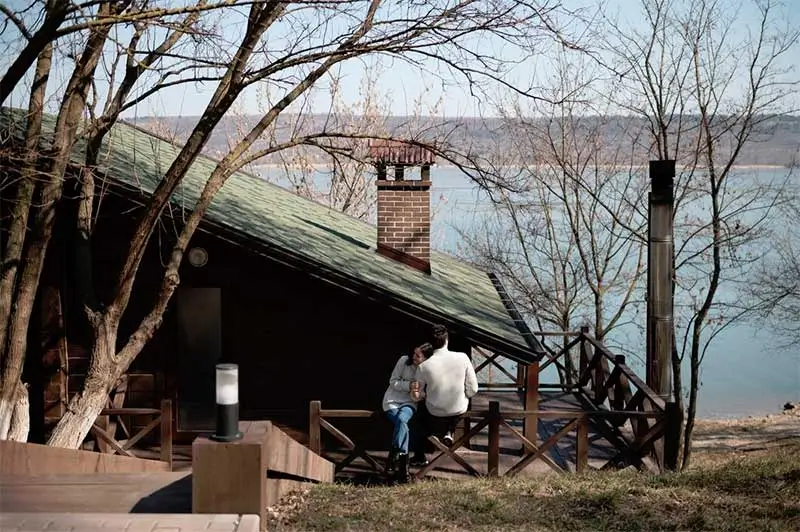
It is one of the more common situations we see, and one of the least anticipated. A family lives in Orange County. Somewhere along the way they bought a cabin near Big Bear that later became a place in Arizona, or a lake house in Idaho, or a rental condo in Nevada that a parent picked up during a good year. It is a happy asset. Nobody thinks of it as a legal complication.
Then the owner passes away, and the family learns that the property in the other state is not simply going to follow the California estate. It has its own rules, its own court, and frequently its own attorney.
Quick Answer
Real estate is generally administered under the law of the state where the property is located, not where the owner lived. When a California resident dies owning real property in another state and that property is not held in a trust, the family usually faces a second probate proceeding in that state, running alongside the California administration. A properly funded revocable trust is the standard way to avoid the duplicate case.
Why real estate follows the property, not the person
Most of what a person owns is administered under the law of the state where they lived. Bank accounts, investment accounts, personal belongings, and business interests generally travel with the owner’s domicile.
Real property is the exception. Land and the buildings on it are generally governed by the law of the state where the property is physically located. The reason is practical rather than technical. A deed is recorded in a county office in that state, title is determined by that state’s records, and only that state’s courts have authority to order a change in those records. A California court order cannot, by itself, clear title to land in another state.
So when a California resident dies owning real property elsewhere, two things need to happen. The California estate is administered in California, and the out-of-state real property is administered under the rules of the state where it sits.
What a second proceeding actually costs
That second case is commonly called an ancillary administration, and it is a real proceeding, not a formality. What it involves varies considerably by state, but families should plan for several categories of cost.
- Time. The second case has its own filing requirements, notice periods, and hearing calendar, and it does not necessarily move at the same pace as the California administration. It frequently outlasts it.
- Filing fees and court costs in the second state, which are separate from anything paid in California.
- Local counsel. Most states expect an attorney licensed there to appear, which means retaining a second firm in a place where the family may know no one.
- Duplicated work. Inventories, notices to creditors and heirs, and accountings often have to be prepared twice, in two formats, on two schedules.
- Coordination. Someone has to keep the two proceedings aligned, particularly on questions like which estate pays the property taxes, insurance, and maintenance while the case is open.
None of this is catastrophic. It is simply expense and delay that the family did not plan for, arriving at a moment when they are already managing a great deal. And it typically applies to a property that everyone already agreed should go to a particular person.
California’s rules for the reverse situation
California has statutes governing the mirror image, meaning what happens when someone who lived in another state dies owning real property here. This is worth understanding, because it shows how the principle works from the other direction and because it applies to a number of Orange County properties owned by out-of-state retirees and investors.
Probate Code section 12501 defines ancillary administration as proceedings in California for the administration of the estate of a nondomiciliary decedent. The rules governing those proceedings appear in Probate Code sections 12500 and following.
Venue is addressed by Probate Code section 7052. If the person who died was not domiciled in California, the proper county is the county where they died, provided they owned property there. If they did not die in California, or owned no property in the county where they died, the proper county is any county where their property is located. When property sits in more than one county, the proper county is the one where a petition for ancillary administration is first filed, and that court then has jurisdiction over the administration.
California law does not govern how another state handles a California resident’s property within its borders. Each state sets its own rules, and the procedures, thresholds, and available shortcuts vary. That is why a general principle is the honest answer here, and why the specifics require someone licensed in the other state.
The tool that avoids the second case
A properly funded revocable living trust is the standard solution, and it is standard because it works. When the out-of-state real property is titled in the name of the trust during the owner’s lifetime, the property does not pass through probate at death. There is no estate to administer in the other state, because the trust already owns the property and a successor trustee already has authority to deal with it.
The operative word is funded. A trust that names the cabin in a schedule of assets, but where the deed still reads in the individual owner’s name, has not accomplished the transfer. The deed is what controls. This is the same issue that sends California homes through probate despite a signed trust, and it applies with equal force across state lines.
Transferring out-of-state property into a trust involves preparing and recording a deed that complies with the requirements of the state and county where the property sits. Requirements differ on form, notarization, witnesses, recording, and transfer tax treatment. It is generally handled with the assistance of someone familiar with that jurisdiction. It is a modest, one-time task compared with a full ancillary proceeding later, and it is the reason this problem is usually preventable rather than merely manageable.
A few situations worth flagging
Some out-of-state property questions carry additional considerations that are worth raising with counsel before deciding on an approach.
- Property held with someone else, where the form of co-ownership may already determine what happens at death.
- Property in a state that offers a transfer on death deed, which some owners use as an alternative, with tradeoffs worth understanding.
- Property that produces rental income, which raises income tax filing questions in the other state during administration.
- Property in another country, which is a materially different analysis and usually requires counsel in that country.
- A property that has been refinanced, rebuilt, or re-deeded since the trust was created, which is a common way a previously funded asset quietly falls back out of the trust.
The practical takeaway
If your family owns real property outside California, the question to ask is simple: whose name is on the deed today? Not what the trust schedule says, and not what everyone understands the plan to be. The deed itself.
If the answer is an individual name, the property is on a path toward a second court proceeding in another state. If the answer is the trust, the plan is doing what it was designed to do. Confirming which is true takes very little time, and it is one of the more valuable things a family can check.
Talk with Goodman Estate Law
If you own a second home, a rental, or land outside California and are not certain how it is titled, Goodman Estate Law can review your documents and deeds and explain your options. Brett Goodman works with families throughout Orange County, including Anaheim, Yorba Linda, Newport Beach, Mission Viejo, and the surrounding communities. Call (949) 768-1491 or schedule a consultation.
Frequently Asked Questions
About the Author
Goodman Estate Law is an Anaheim based estate planning firm serving families throughout Orange County, including Anaheim, Brea, Fullerton, Orange, Placentia, Santa Ana, Tustin, Villa Park, and Yorba Linda. Attorney Brett Goodman focuses his practice on wills, trusts, probate, and trust administration, and he helps families choose and prepare the right successor trustee.
Compliance Disclaimer
This article is provided for general informational purposes only and is not specific legal advice. Reading it does not create an attorney-client relationship with Goodman Estate Law. Every family situation is different, and California law changes over time. For advice about your circumstances, please consult a licensed attorney.
Sources
- California Probate Code section 12501, definition of ancillary administration: https://california.public.law/codes/probate_code_section_12501
- California Probate Code section 7052, venue for a nondomiciliary decedent: https://california.public.law/codes/probate_code_section_7052
- California Probate Code Division 7 Part 13, nondomiciliary decedents: https://law.justia.com/codes/california/code-prob/division-7/part-13/
- California Courts self-help, formal probate overview and venue: https://selfhelp.courts.ca.gov/probate/formal-probate

Brett J. Goodman is the founder and lead attorney at Goodman Estate Law, based in Laguna Hills, CA. The firm specializes in Estate Planning, Trust Administration, and Probate, helping individuals and families create or update wills and trusts. With a focus on personalized, compassionate, and professional guidance, Goodman Estate Law ensures clients’ assets and futures are protected during every stage of estate planning.